
The Neuroscience of Fatherhood: Your Brain Actually Changes
Fatherhood has shifted from a breadwinner-only role to one of active emotional presence — and the research shows that children, fathers, and families all thrive when dads lean in at every stage.
In this article
Think back to 1983, when Mr. Mom made audiences laugh at the idea of a father managing a household. Forty-plus years later, that premise barely registers as a punchline — because involved fatherhood is no longer a novelty. It is a norm in the making. According to the Pew Research Center, the share of two-parent households where fathers are the primary caregiver has more than doubled since the 1980s, and today nearly 1 in 5 stay-at-home parents is a father. More striking still, research published in Pediatrics — the journal of the American Academy of Pediatrics (AAP) — consistently links high father involvement with better cognitive development, lower rates of anxiety, and stronger social skills in children across every age group.
This article is your evidence-based roadmap to modern fatherhood. By the end, you'll understand:
1. The Neuroscience of Fatherhood: Your Brain Actually Changes
Becoming a father is not just an emotional shift — it is a biological one. Studies using MRI imaging have found that fathers who are actively involved in caregiving show structural changes in brain regions associated with empathy, motivation, and reward — the same regions that change in mothers. Testosterone levels in new fathers who spend hands-on time with their infants drop measurably, a hormonal shift researchers associate with increased nurturing behaviour.
Fathers are not just helpers or backup parents — they are biologically primed to be caregivers, and the brain responds to that role just as it does in mothers.
— Ruth Feldman, neuroscientist, Bar-Ilan University (2019)
This matters practically: the more time a father spends in direct caregiving — nappy changes, night feeds, skin-to-skin contact — the stronger these neurological shifts become. Biology rewards showing up.
What This Means at the Newborn Stage
- Skin-to-skin contact with Dad in the first hours after birth raises oxytocin (the bonding hormone) in both father and baby - Fathers who take paternity leave in the first weeks are more likely to remain highly involved at age 3, according to research from the Boston College Center for Work & Family - Responsive caregiving by fathers in infancy is independently associated with secure attachment — separate from maternal attachment

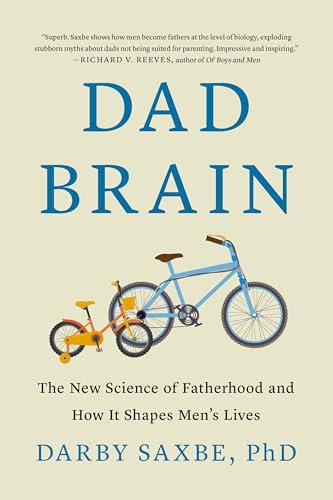


Dad Brain: The New Science of Fatherhood and How It Shapes Men's Lives
- Politics & Social Sciences
- Social Sciences
- Gender Studies
2. Father Involvement From 0–5: Building the Foundation
The first five years are the most neurologically sensitive period of a child's life, and fathers play a distinct — not duplicate — role during this time. Research from the National Institute of Child Health and Human Development (NICHD) found that fathers tend to engage in more physically stimulating, unpredictable play than mothers, and this style of interaction builds children's ability to regulate emotions and tolerate frustration.
In plain terms: roughhousing on the living room floor is developmentally useful. So is reading the same board book seventeen times in a row. Both count.
Age-Specific Touchpoints
0–12 months: - Babywearing increases father-infant synchrony — matching emotional rhythms that underpin secure attachment - Talking directly to your baby (not just about them) accelerates language development; the AAP recommends narrating daily routines as early as birth
1–3 years: - Toddlers with highly involved fathers show fewer tantrums and better frustration tolerance in structured studies - Set aside 20 minutes of child-led play daily — your toddler chooses the activity, you follow their lead
3–5 years: - Father involvement in early literacy (reading aloud, storytelling) predicts reading scores at age 7, independent of socioeconomic status, per UK Department for Education research

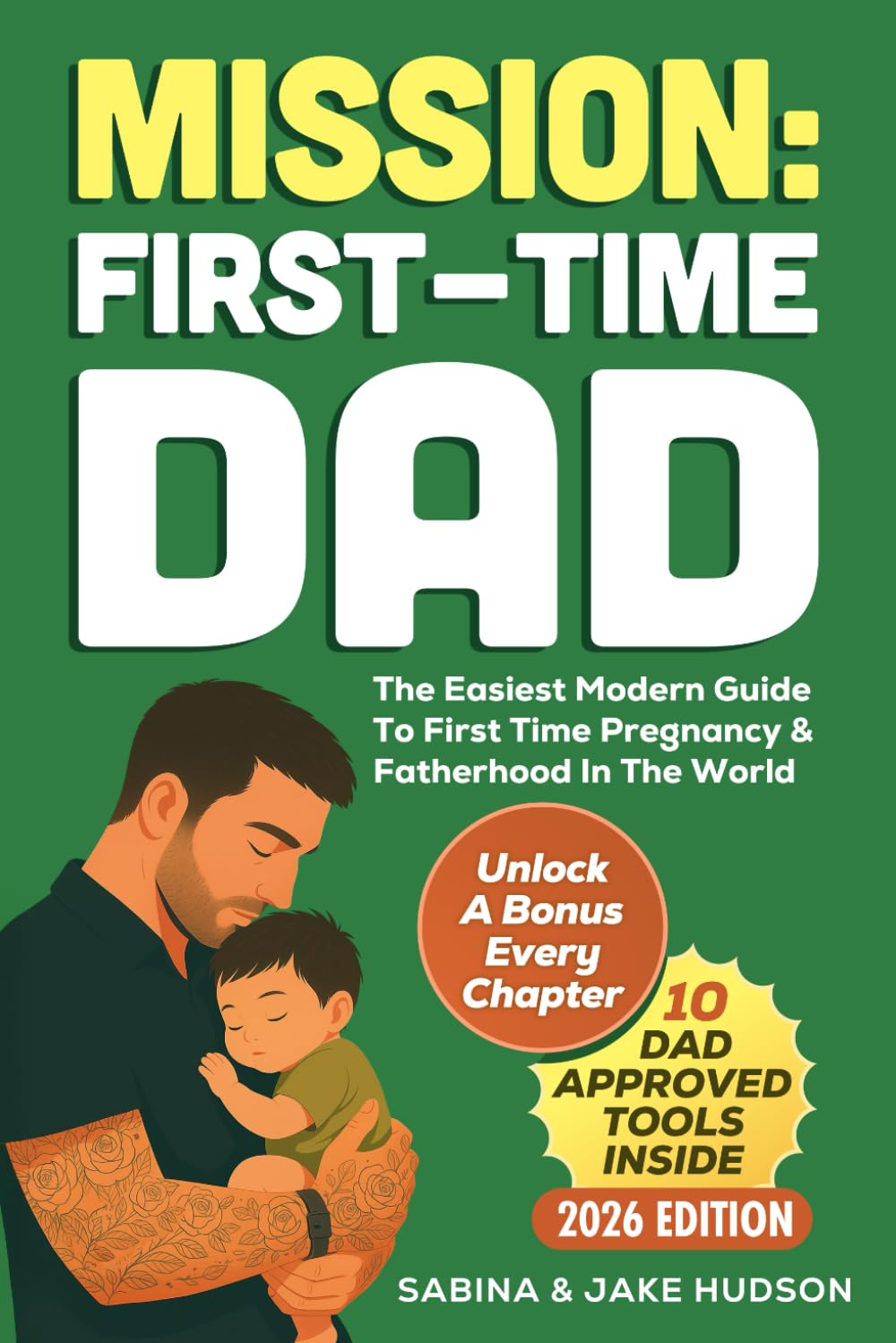


Mission: First-time Dad - The Easiest Modern Guide To First Time Pregnancy & Fatherhood In The World: Your 7 Day All In One Blueprint - Advice On Being A Supportive Partner, Childbirth & Newborn Care
- Health, Fitness & Dieting
- Women's Health
- Pregnancy & Childbirth
3. School-Age Fatherhood (6–12): Showing Up Where It Counts
School-age children are watching everything. They are building an internal model of what adults do, how men behave, and what relationships look like — and fathers are a primary data source for all three.
The AAP's 2016 policy statement on fathers notes that father involvement during the primary school years is associated with higher academic motivation, better peer relationships, and lower rates of risk-taking behaviour in adolescence. The effect is dose-dependent: more consistent involvement, better outcomes.
Children with involved fathers are twice as likely to go to college and 75% less likely to have a teen birth.
— National Fatherhood Initiative, citing U.S. Census Bureau data (2020)
What "Showing Up" Actually Looks Like
It is not about grand gestures. The research points to ordinary, repeated moments:
- Eating dinner together 4–5 times per week is associated with better mental health outcomes (University of Florida, published in Journal of Adolescent Health) - Attending school events, even occasionally, signals to children that their world matters to you - Knowing your child's friends' names — and their friends' parents — is a protective factor against peer pressure





The Daily Dad: 366 Meditations on Parenting, Love, and Raising Great Kids
- Relationships
- Interpersonal Relations
- Image Unavailable Image not available forColor:
4. Fathering Through the Teen Years (13–17): Staying Connected When They Pull Away
Adolescence is when many fathers quietly retreat — and when the research says presence matters most. Teenagers are wired to push back, seek independence, and test every boundary. This is neurologically normal. What is also normal, and often underestimated, is how much they still want their father's approval and connection.
A landmark study from Brigham Young University found that adolescents with warm, involved fathers reported significantly lower rates of depression, delinquency, and substance use — even after controlling for maternal involvement and socioeconomic factors.
How to Stay in the Room (Even When They Don't Want You There)
- Side-by-side activities beat face-to-face conversations at this age. Drive them somewhere, cook together, play a game. Teens open up when they don't feel interrogated. - Stay curious, not critical. Ask about their music, their friends, their opinions — without immediately correcting or advising. - Repair quickly after conflict. Teens remember ruptures, but they also remember when a parent comes back and says, "I handled that badly. I'm sorry."



The Intentional Father: A Practical Guide to Raise Sons of Courage and Character (Parenting Boys for a New Dad, Grandpa, Husband, or Dad to Be – Great Gift for Christian Men)
- Religion & Spirituality
- Christian Books & Bibles
- Christian Living
5. The Policy Gap: Why Parental Leave Is a Fatherhood Issue
Culture changes faster than policy — but policy shapes what is possible. Countries with generous, non-transferable paternity leave (meaning the leave is use-it-or-lose-it for fathers) consistently produce more involved fathers over the long term.
Sweden introduced "daddy months" in 1995 — weeks of parental leave reserved exclusively for fathers. Research published in the IZA Institute of Labor Economics found that Swedish fathers who took this leave were significantly more likely to share domestic and caregiving tasks years later, and their children showed measurably better cognitive outcomes.
In the United States, as of 2024, there is no federal paid paternity leave. The Family and Medical Leave Act (FMLA) provides 12 weeks of unpaid leave to eligible employees, but fewer than 20% of American workers are covered by any paid parental leave through their employer, according to the U.S. Bureau of Labor Statistics.
What You Can Do Right Now
- Check your employer's HR policy — many companies have improved paternity leave quietly and fathers don't know - If your country or state offers any form of paid leave, take it — all of it. Research shows the bonding window matters - Advocate internally: fathers who request and take leave normalise it for the men who come after them
6. Breaking the Stereotype: What Modern Fatherhood Actually Looks Like
The "Mr. Mom" trope assumed that nurturing was foreign to fathers — a skill they had to awkwardly acquire. The evidence says otherwise. Fathers across cultures, when given the opportunity and expectation to be involved, demonstrate the full range of caregiving competence: sensitivity, attunement, emotional regulation, and warmth.
Social media has accelerated this cultural shift. The hashtag #DadLife has generated hundreds of millions of posts of fathers doing ordinary caregiving with pride and humour — normalising what research has always shown to be true.
The stereotype of the distant, emotionally unavailable father is increasingly at odds with how the majority of fathers actually want to show up for their children.
— Pew Research Center, "Modern Parenthood," (2013)
The Role of Modelling
Children who grow up with involved fathers are more likely to become involved parents themselves — regardless of gender. Boys with nurturing fathers develop more flexible ideas about masculinity. Girls with involved fathers show higher self-esteem and stronger academic confidence, according to research compiled by the American Psychological Association (APA).



The Parenting Book for Girl Dads: Navigating Fatherhood: A Handbook for Raising Confident, Resilient, and Happy Daughters
- Parenting & Relationships
- Family Relationships
- Fatherhood
7. A Father's Own Wellbeing: You Can't Pour From an Empty Cup
Paternal postnatal depression is real and significantly underdiagnosed. The AAP estimates that 1 in 10 fathers experiences depression in the first year after a child is born — a rate that rises to 1 in 4 when the mother is also depressed. Unlike maternal postnatal depression, paternal depression often presents as irritability, withdrawal, or overwork rather than sadness, which means it frequently goes unrecognised.
Signs to Watch For
- Persistent irritability or short temper that is out of character - Withdrawing from family activities or feeling emotionally numb - Increased alcohol use or working excessive hours as avoidance - Feeling like you are failing as a father despite doing "everything right"



First Time Father: The Modern Guide for Expecting Dads to Easily Navigate Pregnancy and Prepare Effectively
- Medical Books
- Internal Medicine
- Obstetrics & Gynecology
Fatherhood Approaches Across the Ages: At a Glance
| Stage | Child's Age | Father's Core Role | Key Research Benefit | Recommended Resource |
|---|---|---|---|---|
| Newborn & Infant | 0–12 months | Skin-to-skin, night caregiving, narrating daily life | Secure attachment, neurological development | Mission: First-time Dad |
| Toddler | 1–3 years | Physical play, emotion coaching, reading aloud | Emotional regulation, language development | Dad Brain: The New Science of Fatherhood |
| Preschool | 3–5 years | Storytelling, structured play, attending appointments | Early literacy, school readiness | The Daily Dad |
| School-Age | 6–12 years | Shared meals, school involvement, modelling conflict resolution | Academic motivation, lower risk-taking | The Intentional Father |
| Early Teen | 13–15 years | Side-by-side activities, curiosity over criticism | Lower depression and substance use rates | The Parenting Book for Girl Dads |
| Later Teen | 16–17 years | Maintained rituals, repair after conflict, autonomy support | Identity formation, relationship quality | First Time Father |
Expert Insights on Modern Fatherhood
The story of fatherhood is being rewritten in real time — in hospital delivery rooms, on school runs, at 3 a.m. feeds, and at kitchen tables where dads ask their teenagers about the hardest part of their day. The science, the policy, and the culture are all pointing the same direction: children need their fathers present, emotionally available, and consistent — and fathers need this too, for their own wellbeing and sense of purpose.
The most powerful thing you can do for your child is not a single dramatic act. It is showing up, day after day, in the ordinary moments that accumulate into a childhood. As the research makes clear: presence is the gift that keeps giving — across every age, every stage, and every generation.
If this article resonated with you, save it, share it with a father you know, or pass it to a partner who needs the reminder. The more we normalise involved fatherhood, the easier it becomes for every dad who comes after us.
Sources & References
- Pew Research Center. "Modern Parenthood: Roles of Moms and Dads Converge as They Balance Work and Family." 2013. pewresearch.org
- Pew Research Center. "Stay-at-Home Fathers." 2014. pewresearch.org
- American Academy of Pediatrics. "The Importance of Fathers in the Healthy Development of Children." Pediatrics, 2016.
- National Institute of Child Health and Human Development (NICHD). "Study of Early Child Care and Youth Development." nichd.nih.gov
- Feldman, R. et al. "Sensitive parenting is associated with plasma oxytocin and polymorphisms in the OXTR and CD38 genes." Biological Psychiatry, 2012.
- Pruett, K.D. "Fatherneed: Why Father Care is as Essential as Mother Care for Your Child." Free Press, 2000.
- Lamb, M.E. (Ed.). "The Role of the Father in Child Development." Wiley, 5th Edition, 2010.
- Paulson, J.F. & Bazemore, S.D. "Prenatal and Postpartum Depression in Fathers and Its Association with Maternal Depression." JAMA, 2010.
- Boston College Center for Work & Family. "The New Dad" research series. bc.edu/cwf
- IZA Institute of Labor Economics. "Parental Leave and Fathers' Involvement: Evidence from Sweden." iza.org
- U.S. Bureau of Labor Statistics. "Employee Benefits Survey: Leave Benefits." 2023. bls.gov
- National Fatherhood Initiative. "The Father Absence Crisis in America." fatherhood.org, 2020.
- American Psychological Association. "Fathers' Influence on Daughters' Academic Achievement." apa.org
- Brigham Young University. "Father Involvement and Adolescent Outcomes." Journal of Family Psychology, 2010.
Frequently Asked Questions
Is it too late to become a more involved father if my children are already older?
Do fathers bond differently than mothers?
How much paternity leave should I take?
What if my partner and I disagree about how involved I should be?
Can an involved father make up for a difficult home environment?
My son doesn't seem to want to spend time with me. What should I do?
Are there good books specifically for fathers navigating modern parenthood?
Was this helpful?
Thanks — your feedback helps us pick what to write next.