Why the Preschool Brain Is Uniquely Ready to Learn
The preschool years (ages 3–5) are a neurologically primed window for learning — the right mix of structured play, language-rich environments, and social interaction now builds the cognitive and emotional scaffolding children will rely on for the rest of their school lives.

In this article
Imagine watching your 4-year-old line up toy animals by size and announce, completely unprompted, "These are in order, Mummy." That's not a party trick — that's early mathematical reasoning unfolding in real time. And it's happening constantly between ages 3 and 5, whether or not you're paying attention to it.
The science backs this up in striking terms. The Harvard Center on the Developing Child reports that more than one million new neural connections form every second in the first few years of life — a pace that never occurs again. By the time a child turns 5, roughly 90% of the brain's foundational architecture is already in place.
This guide will help you understand:
1. Why the Preschool Brain Is Uniquely Ready to Learn
The single most important thing to understand about ages 3–5 is that your child's brain is operating in a state of extraordinary neuroplasticity — meaning it is more responsive to experience, language, and environment than it will ever be again.
The American Academy of Pediatrics (AAP) describes early childhood as a "sensitive period" during which experiences literally shape the physical structure of the brain. Neural pathways that are used repeatedly become stronger; those that aren't get pruned away. This is why habits, language patterns, and emotional responses formed now tend to be durable.
What "School Readiness" Really Means
Parents often assume school readiness means knowing the alphabet or counting to 20. Researchers define it more broadly. The National Education Association identifies five domains of school readiness:
- Physical health and motor development - Social and emotional development - Approaches to learning (curiosity, persistence, self-regulation) - Language and communication - Cognition and general knowledge
A child who can sit with a task, tolerate frustration, and ask for help is better prepared for kindergarten than one who can recite the alphabet but melts down when challenged. Both matter — but the emotional and attitudinal skills often predict long-term outcomes more reliably.
2. Play-Based Learning: The Science Behind "Just Playing"
Play is the primary vehicle through which 3–5-year-olds learn — not a break from learning, but the engine of it. This is one of the most well-established findings in developmental psychology, and it has direct implications for how you structure your child's day.
Play is not a luxury. Play is a necessity.
— Kay Redfield Jamison, referenced in AAP clinical reports on play and child development (2018)
The AAP's 2018 clinical report The Power of Play concluded that child-led, unstructured play promotes executive function, creativity, and social competence — skills that are directly linked to academic achievement. Structured play (guided activities with a learning goal) adds an additional layer of skill-building when balanced appropriately.
Types of Play and What Each Builds
- Pretend/dramatic play — builds language, empathy, and narrative thinking - Constructive play (blocks, puzzles, building) — develops spatial reasoning and problem-solving - Physical play — supports gross motor development, emotional regulation, and risk assessment - Games with rules — introduces turn-taking, patience, and early logical thinking
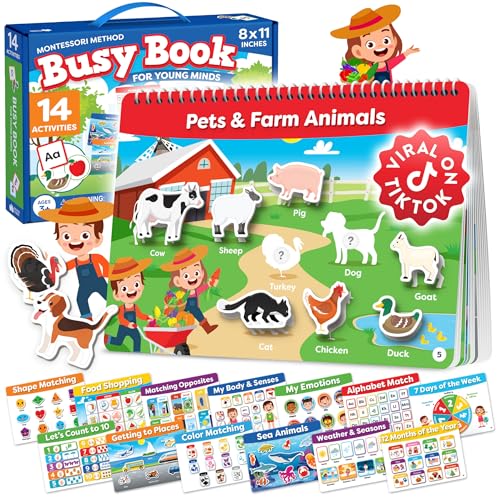

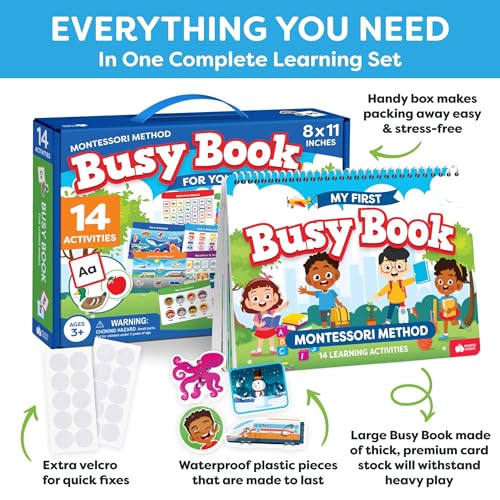
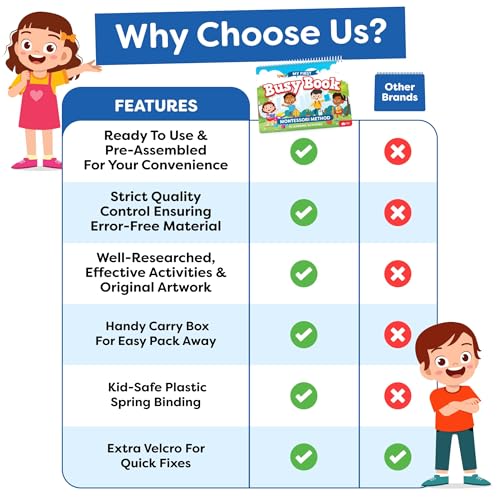
Montessori Preschool Busy Book for Toddlers Ages 3 and Up - Preassembled - Preschool Learning Activities Montessori Educational Toys - Gifts for 3 Year Old Boys, Toddler Learning Toys Activities
- Keep Kids Busy & Entertained Anywhere with Pre-Assembled Montessori Preschool Busy Book For Toddlers Ages 3 An
- Preschool Readiness Edutainment Toddler Travel Toys Workbook That Teach The Alphabet & More. Build a strong le
- Quiet Book That Encourages Learning Through Play. These kindergarten learning activities airplane toys for tod
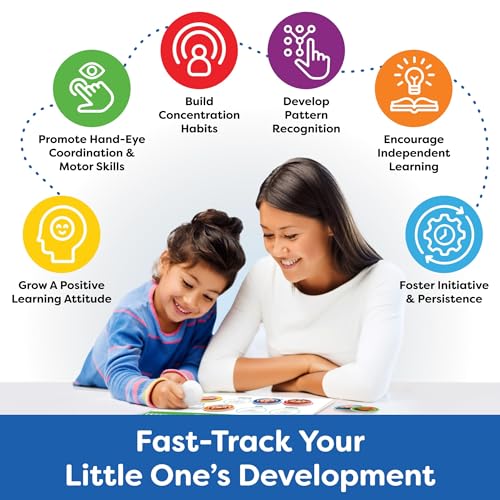
The Momo & Nashi Montessori Busy Book is a strong example of structured play done well — 14 core concept activities covering alphabet, numbers, emotions, and more, in a format that feels like play to a 3-year-old but is deliberately scaffolded for learning. It travels well, which means you can keep learning consistent even on the go.
3. Language and Early Literacy: The Foundation Under Everything Else
Language development between ages 3 and 5 is explosive. Most children move from simple sentences to complex storytelling, begin to understand that print carries meaning, and start to connect sounds to letters — the precursor to reading.
The National Institute for Literacy estimates that children who arrive at kindergarten with strong oral language skills are significantly more likely to become proficient readers by third grade. Third-grade reading proficiency, in turn, is one of the strongest predictors of high school graduation.
Building Literacy at Home
For children beginning to practise letter formation, Momo & Nashi Letter Tracing Books offer a reusable, low-frustration way to develop the fine motor control needed for writing. The dry-erase format means your child can practise the same letter 20 times without wasting paper — and without the pressure of permanent marks.
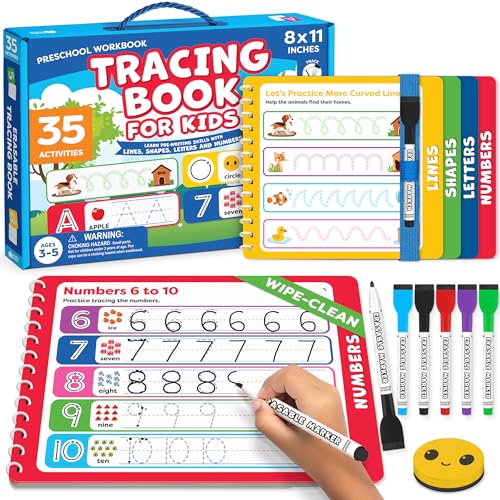
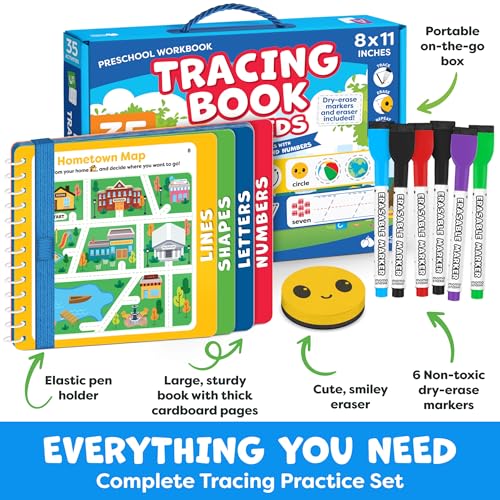
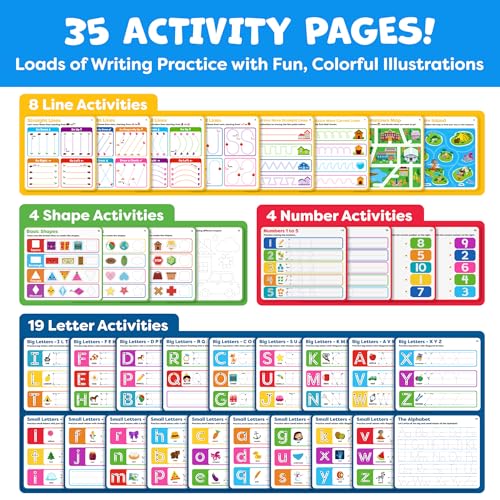
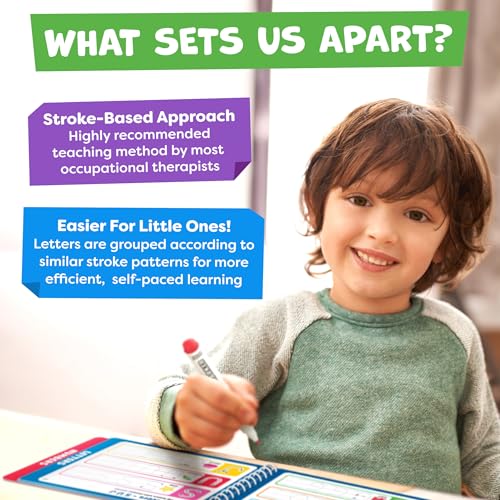
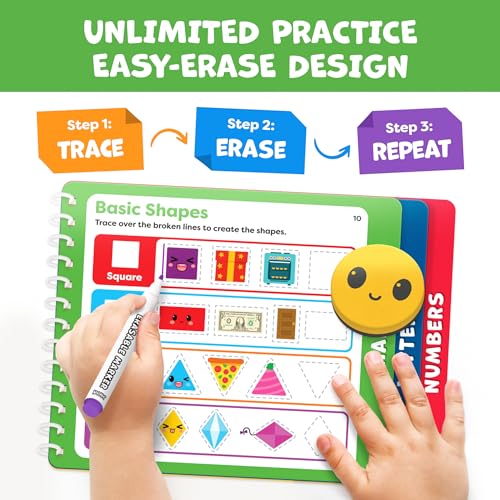
Preschool Learning Activities - Letter Tracing Books for Kids Ages 3-5 - Toddler Handwriting Practice - Learning Books for 4 Year Olds, Educational Learning Toys for 3 Year Old - 4 Year Old Boy Toys
- Complete Preschool Learning Activities - Letter Tracing For Kids Ages 3-5 Set! Includes fun Preschool Workbook
- Develop Core Foundational Skills with 35 Super Fun Toddler Learning Activities. Writing practice for kids age
- Non-Toxic, Dry Erase Kindergarten Workbooks Markers. These homeschool preschool classroom must haves ensure a
4. Social and Emotional Learning: The Skills That Outlast Preschool
Ask any primary school teacher what separates children who thrive in Year 1 from those who struggle, and the answer is rarely academic. It's almost always about regulation — can this child manage frustration, wait their turn, and recover from disappointment?
Social-emotional learning (SEL) in the preschool years covers: - Identifying and naming emotions - Developing empathy and perspective-taking - Managing impulses and transitions - Building friendships and resolving conflict
Practical Ways to Build SEL at Home

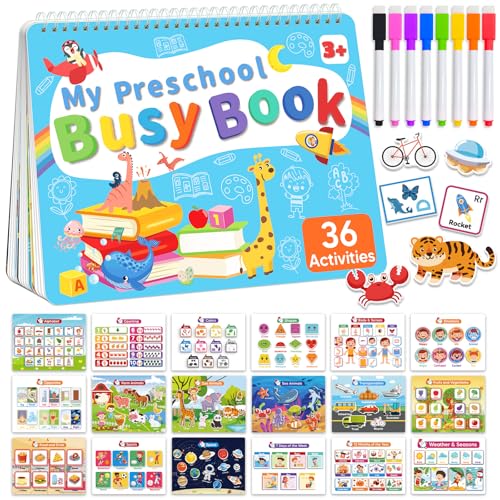
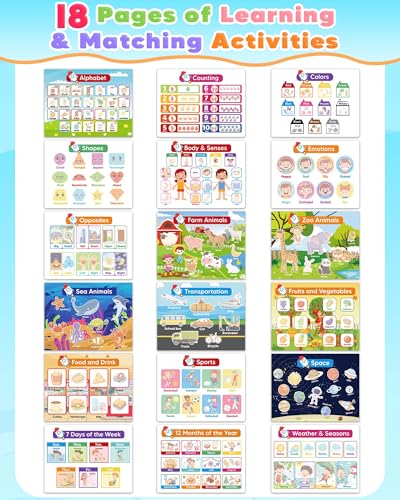
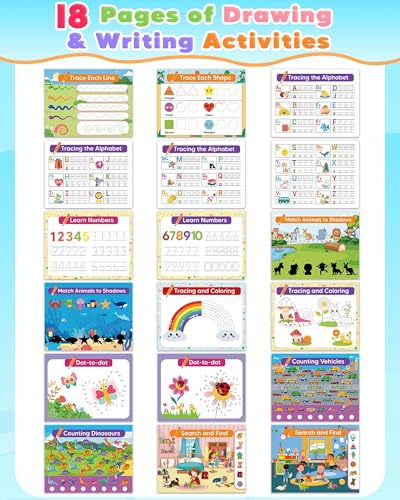
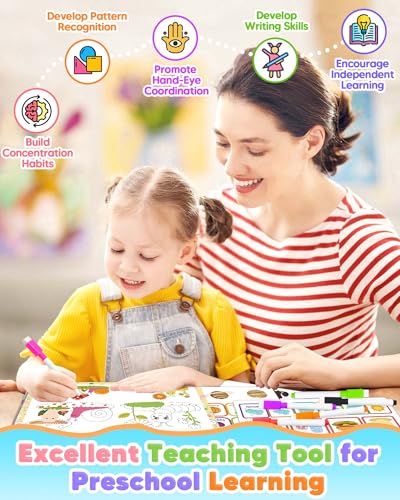
Toddler Busy Book Preschool Learning Activities, Montessori Educational Toys for 3 4 year old Boy Girl Gifts, Tracing Coloring Activity Books for Kids Ages 3-5, Autism Sensory Travel Toys for Toddlers
- Montessori Busy Book for Toddlers: This toddler busy book has 36 fun activities, including 18 pages of learnin
- Fun Learning Tool for Homeschool: This activity book is an interactive learning toy for toddlers, helping chil
- Safe & Durable Educational Toy: The preschool workbook is crafted from premium quality thick card stock, ensur
The Gagule Toddler Busy Book includes an emotions activity page alongside alphabet and numbers — a small but meaningful design choice that treats emotional vocabulary as a core literacy skill rather than an add-on.
5. Choosing the Right Preschool Programme: What the Evidence Says
Not all preschool programmes are equal, and the differences matter more than most parents realise. Research consistently shows that programme quality — not simply attendance — drives outcomes.
The National Institute for Early Education Research (NIEER) tracks preschool quality across the US annually. Their benchmarks for high-quality programmes include: qualified teachers, low child-to-staff ratios (ideally 8:1 or better for 3-year-olds), a research-based curriculum, and ongoing assessment of child progress.
Key Approaches Compared
Different educational philosophies take different approaches to the preschool years. Here's what the evidence says about each:
- Play-based/emergent curriculum — child-led, follows interests; strong evidence for creativity and intrinsic motivation - Montessori — self-directed activity with structured materials; strong evidence for executive function and reading - Reggio Emilia — project-based, community-focused; strong for language and collaborative thinking - Academic/direct instruction — teacher-led, structured; gains in specific skills but mixed evidence on long-term outcomes vs. play-based approaches
What to Look For on a Preschool Visit
6. Supporting Learning at Home: Practical Tools and Daily Habits
You don't need a dedicated "learning room" or a subscription curriculum to support your preschooler's development. What you need is consistency, conversation, and materials that invite engagement.
The most powerful home learning tool remains the same one it's always been: you. Responsive conversation — where you follow your child's lead, expand on what they say, and ask genuine questions — builds vocabulary, reasoning, and the sense that learning is a shared, enjoyable activity.
Workbooks and Structured Activities
For children who are ready for more structured practice, a well-designed workbook bridges home learning and preschool skills without feeling like homework.


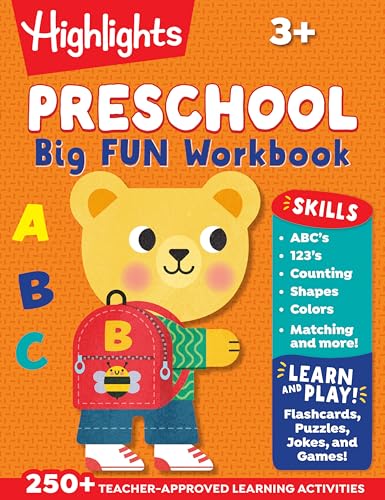
Preschool Big Fun Workbook: 256-Page Preschool Learning Workbook, Practice Math, Writing, Shapes and More with Puzzles and Activities for Preschoolers
- Children's Books
- Growing Up & Facts of Life
- Friendship, Social Skills & School Life
The Preschool Big Fun Workbook packs 256 pages of maths, writing, shapes, and puzzles into one affordable resource — ideal for children who love sitting down with a "real book" and working through activities independently or with a caregiver.
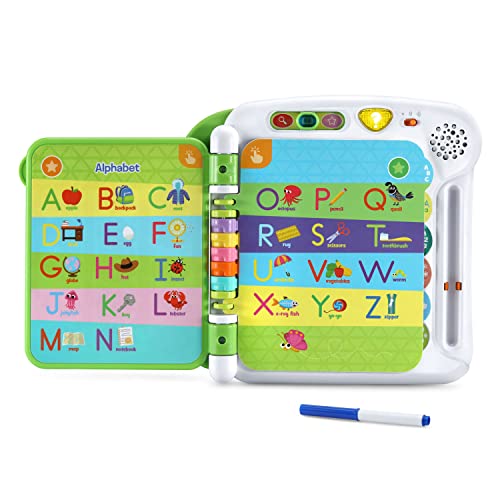
For a tech-assisted option, the LeapFrog Prep for Preschool Activity Book combines touch-sensitive pages with marker-based tracing activities, covering counting, colours, the alphabet, and weather — building confidence through interactive feedback that a static workbook can't provide.
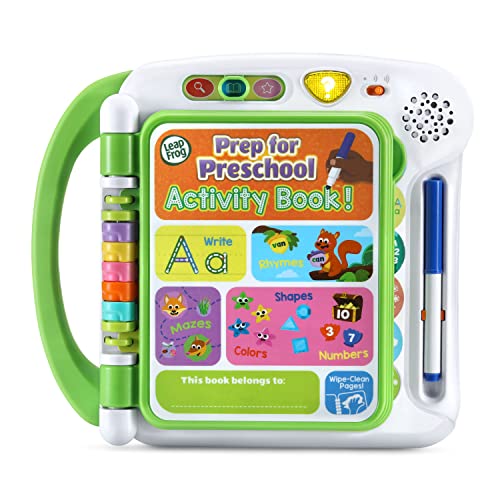
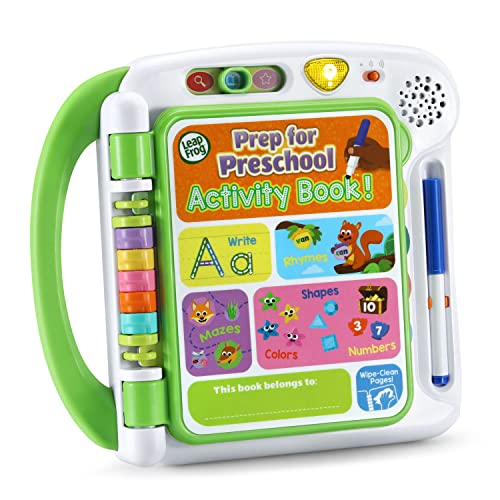
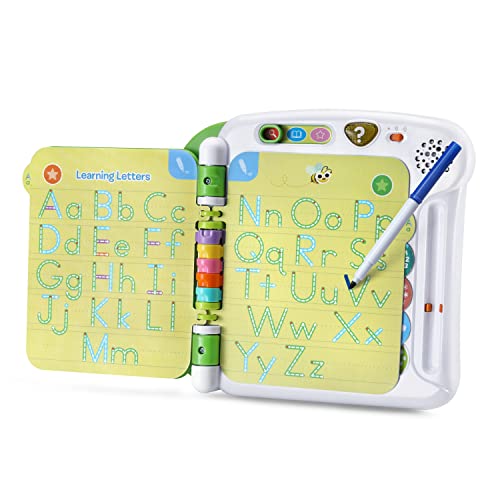
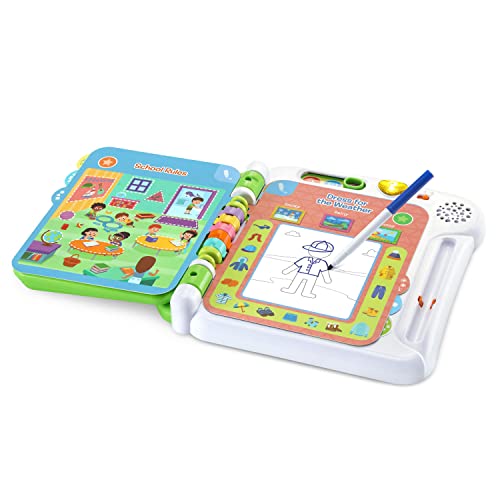
LeapFrog Prep for Preschool Activity Book
- Interactive book helps preschoolers prepare for school and build confidence with replayable learning activitie
- Explore counting, colors, shapes, the alphabet and words with six touch-sensitive pages
- Practice letter writing, number matching, shape tracing and line drawing with six marker pages and an erasable
For families looking for a portable, reusable option with a Montessori flavour, the Lumikidz Tracing Workbook Set offers 37 reusable dry-erase pages covering letters, numbers, shapes, and matching activities — a solid all-in-one for ages 3–5.
7. When to Seek Professional Guidance
Most developmental variation in the preschool years is normal — children reach milestones at different paces. That said, there are specific signs that warrant a conversation with your paediatrician or a developmental specialist.
Signs to Discuss With Your Doctor
By age 3:
By age 4:
By age 5:
Comparing Preschool Learning Tools: At-a-Glance Guide
| Learning Tool Type | Best For | Core Skills Targeted | Key Drawback | Recommended Product | Price Range |
|---|---|---|---|---|---|
| Letter tracing workbook (dry-erase) | Ages 3–5, fine motor + writing readiness | Letter formation, pen control, hand-eye coordination | Requires adult guidance initially | Momo & Nashi Letter Tracing Book | $23–26 |
| Montessori busy book (pre-assembled) | Ages 3–5, independent learners | Alphabet, numbers, emotions, matching, shapes | Less writing practice | Momo & Nashi Montessori Busy Book | $27–29 |
| All-in-one tracing workbook set | Ages 3–5, home or classroom use | Letters, numbers, shapes, early literacy | Fewer concept categories | Lumikidz Tracing Workbook Set | $22–24 |
| Montessori activity book with carry bag | Ages 3–4, travel + sensory learners | Alphabet, animals, emotions, drawing, writing | Lighter on writing practice | Gagule Toddler Busy Book | $18–20 |
| Large-format print workbook | Ages 4–5, independent practice | Maths, writing, shapes, puzzles | Single-use (not reusable) | Preschool Big Fun Workbook | $16–18 |
| Interactive electronic activity book | Ages 3–5, tech-assisted learners | Counting, alphabet, shapes, weather, tracing | Requires batteries/charging | LeapFrog Prep for Preschool Activity Book | $22–23 |
Expert Insights
The preschool years go fast — sometimes frustratingly so when you're in the middle of a meltdown over the wrong-coloured cup, and sometimes achingly so when you realise your 3-year-old is now nearly 5 and starting school in September. What this window asks of you isn't perfection. It's presence, curiosity, and the willingness to follow your child's lead.
Every time you answer a "why?" question with genuine interest, every time you read one more page at bedtime, every time you let them try and fail and try again with a puzzle — you are doing early childhood education. The research just confirms what your instincts already know: this time matters, and you are the most important teacher they will ever have.
Save this guide to revisit as your child moves through the preschool years, and share it with a parent who's just starting this stage.
Sources & References
- Harvard Center on the Developing Child. "Brain Architecture." 2023. https://developingchild.harvard.edu/science/key-concepts/brain-architecture/
- American Academy of Pediatrics. "The Power of Play: A Pediatric Role in Enhancing Development in Young Children." Pediatrics, 2018. https://doi.org/10.1542/peds.2018-2058
- American Academy of Pediatrics. "Council on Children with Disabilities: Identifying Infants and Young Children with Developmental Disorders." 2020.
- National Institute for Early Education Research (NIEER). "The State of Preschool Yearbook." 2023. https://nieer.org/state-preschool-yearbooks
- Durlak, J.A. et al. "The Impact of Enhancing Students' Social and Emotional Learning." Child Development, 2011. https://doi.org/10.1111/j.1467-8624.2010.01564.x
- World Health Organization. "Guidelines on Physical Activity, Sedentary Behaviour and Sleep for Children Under 5 Years of Age." 2019. https://www.who.int/publications/i/item/9789241550536
- Centers for Disease Control and Prevention. "Learn the Signs. Act Early." Developmental Milestones. 2023. https://www.cdc.gov/ncbddd/actearly
- National Education Association. "Research Spotlight on Early Childhood Education." https://www.nea.org/resource-library/early-childhood-education
- Weisberg, D.S. et al. "Guided Play: Principles and Practices." Current Directions in Psychological Science, 2016. https://doi.org/10.1177/0963721416645512
Frequently Asked Questions
What is the best age to start preschool?
Is academic preschool better than play-based preschool?
How much screen time is appropriate for 3–5-year-olds?
My 4-year-old doesn't want to sit still for learning activities. Is something wrong?
Do preschool learning workbooks actually help?
What if we can't afford preschool?
How do I know if my child is on track developmentally?
Was this helpful?
Thanks — your feedback helps us pick what to write next.