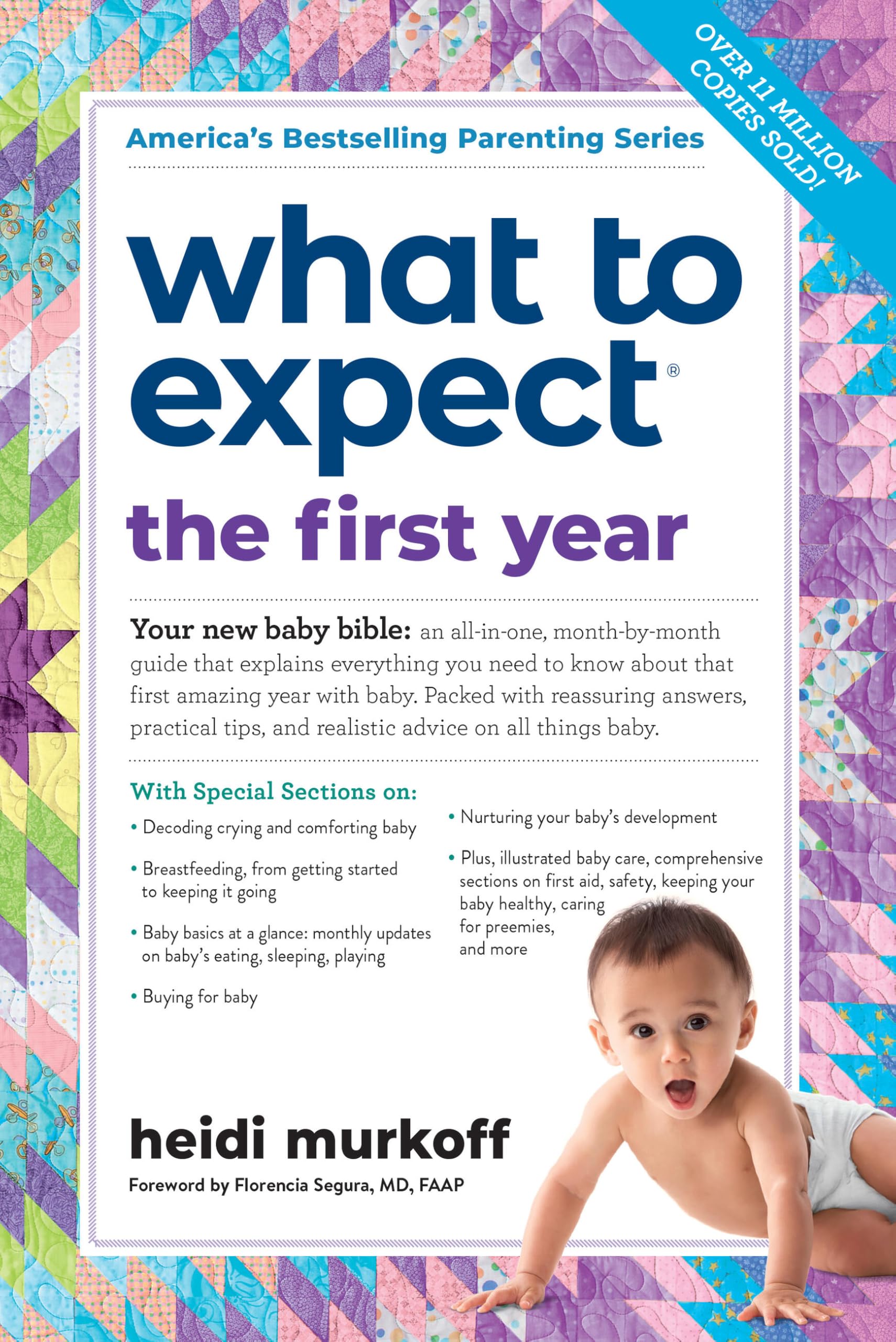
Your Newborn's Physical Development: More Than Eating and Sleeping
In their first four weeks, newborns are far more capable than they look — they arrive wired with survival reflexes, working senses, and a brain already primed for connection, and every day brings measurable developmental change.
In this article
You've just brought home a person who, a month ago, didn't exist outside your body. That person can already recognise your voice — they've been listening to it since around 28 weeks of pregnancy, according to the American Academy of Pediatrics (AAP). In fact, researchers have found that newborns show measurable heart-rate changes in response to their mother's voice within hours of birth, long before the first deliberate smile or purposeful grab.
Yet the first month can feel deceptively quiet. A lot of eating, a lot of sleeping, a lot of nappy changes. It's easy to wonder whether anything developmental is actually happening.
It absolutely is — and this guide will show you exactly what to look for, what to do about it, and what can wait.
In this article you'll understand:
1. Your Newborn's Physical Development: More Than Eating and Sleeping
Your newborn arrives with a surprisingly complete set of physical capabilities — the challenge is knowing where to look for them.
At birth, your baby has very limited voluntary muscle control. Almost everything they do in the first weeks is driven by primitive reflexes — automatic, involuntary responses that are hardwired into the nervous system. The AAP identifies these reflexes as critical survival tools, and your paediatrician will check them at your newborn exam.
The Reflexes That Matter Most
Here are the key ones you'll actually see at home:
- Rooting reflex: Stroke your baby's cheek and they'll turn toward your finger and open their mouth — this is how they find the breast or bottle - Sucking reflex: Present a nipple or finger and they'll suck rhythmically, coordinating with the swallowing reflex to feed safely - Moro (startle) reflex: A sudden noise or movement causes your baby to throw their arms wide, then pull them in — looks alarming, completely normal - Grasp reflex: Place your finger in their palm and they'll grip it with surprising strength - Stepping reflex: Hold your baby upright with feet touching a surface and they'll make walking-like movements — this disappears by about 2 months before true walking develops much later
By the end of week 4, you'll start to notice the first hints of voluntary movement: brief, effortful attempts to lift the head during tummy time, and hands that drift toward the mouth with increasing intent.
2. Sensory Development: How Your Baby Experiences Their New World
All five senses are active at birth — they've just had very different amounts of practice.
Vision
Your newborn can see, but their focal range is roughly 20–30 cm (8–12 inches) — almost exactly the distance from your breast to your eyes during feeding. This is not a coincidence. High-contrast patterns (think black-and-white) and human faces are the most visually engaging objects for a newborn. Don't worry if your baby occasionally looks cross-eyed; intermittent eye crossing is normal until about 3–4 months as the eye muscles strengthen.
Hearing
Hearing is your baby's most mature sense at birth. The cochlea is fully formed by mid-pregnancy, and research published in the journal Acta Paediatrica has shown that newborns can distinguish their mother's voice from a stranger's within hours of birth. Studies also show newborns show a preference for higher-pitched voices — which is why the instinct to raise your pitch when talking to a baby ("motherese" or infant-directed speech) is cross-cultural and developmentally useful.
Smell and Taste
Your baby's sense of smell is remarkably acute. Research has documented that breastfed newborns will consistently orient toward a pad soaked in their own mother's breast milk over one soaked in another mother's milk. Taste is similarly well-developed — newborns have more taste buds per square centimetre than adults, and they show clear preferences for sweet flavours (like breast milk) from birth.
Touch
Skin-to-skin contact — sometimes called kangaroo care — does far more than feel nice. The WHO recommends immediate and prolonged skin-to-skin contact for all newborns, including healthy term babies, citing evidence for improved temperature regulation, breastfeeding establishment, and reduced infant stress.
3. Social and Emotional Development: Connection Before Smiles
Your newborn is already a social creature — they just communicate in ways that are easy to miss.
The "social smile" — a genuine, responsive smile triggered by your face or voice — typically appears between 6 and 8 weeks, according to the AAP's developmental surveillance guidelines. In the first four weeks, the smiles you see are usually reflexive (often during sleep). But that doesn't mean social development isn't happening.
What Social Development Looks Like at 0–4 Weeks
Serve and return interactions — the back-and-forth between caregiver and baby — are the building blocks of brain architecture.
— Center on the Developing Child, Harvard University (2023)
4. Motor Milestones: What to Expect Week by Week
Motor development in the newborn period is less about big leaps and more about a gradual shift from reflex-driven movement to intentional control.
Gross Motor (Large Muscle Groups)
- Week 1–2: Head flops completely — always support it. During tummy time, your baby may briefly lift their chin off the surface - Week 2–3: Head bobbing becomes slightly more controlled; legs kick rhythmically when lying on their back - Week 3–4: Some babies can briefly hold their head at a 45-degree angle during tummy time; arm and leg movements become slightly smoother
Fine Motor (Hands and Fingers)
- Hands are fisted most of the time in weeks 1–2 - The grasp reflex is strong — your baby will grip your finger firmly if you place it in their palm - By week 4, you may notice brief moments where the hands open and the baby seems to examine them — this is the very beginning of hand awareness
5. Cognitive Development: A Brain Building at Warp Speed
The newborn brain grows faster in the first year than at any other point in life — and the first month sets the foundation.
At birth, a baby's brain is about 25% of its adult volume. By the end of the first year, it will reach roughly 75%. The connections being formed right now — driven almost entirely by sensory input and responsive caregiving — are literally shaping the architecture of your child's future thinking, language, and emotional regulation.
What Cognitive Development Looks Like at 0–4 Weeks
6. Red Flags: When to Call Your Paediatrician
Most variation in the newborn period is normal — but some signs warrant a prompt call rather than a "wait and see."
Contact your paediatrician if, by the end of the first month, your baby:
7. Documenting the First Month: Milestones Worth Capturing
The first month passes in a blur of feeds and nappy changes — and then suddenly your baby is different. Documenting these early weeks doesn't need to be elaborate, but you will be glad you did it.
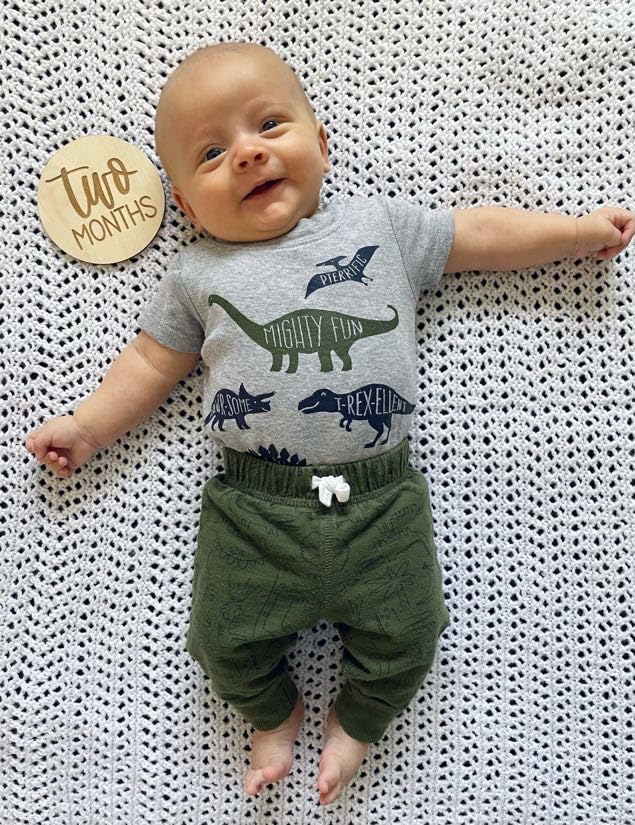
Monthly milestone cards have become one of the most popular ways to track and photograph developmental progress across the first year. Placed next to your baby during a weekly or monthly photo, they create a visual timeline that's genuinely meaningful — and makes a beautiful keepsake.
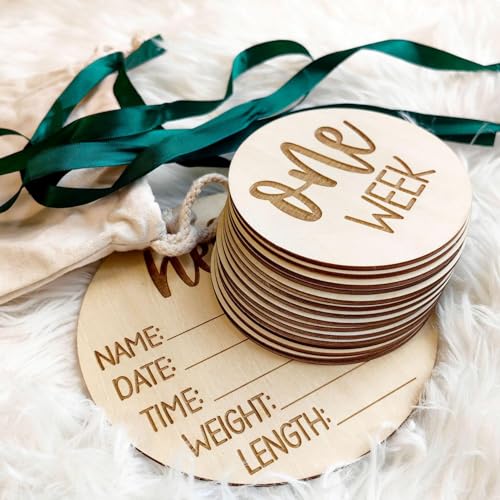
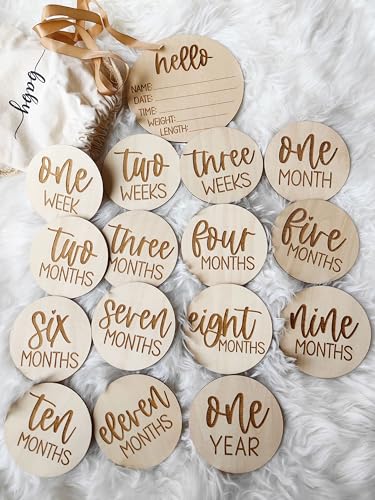
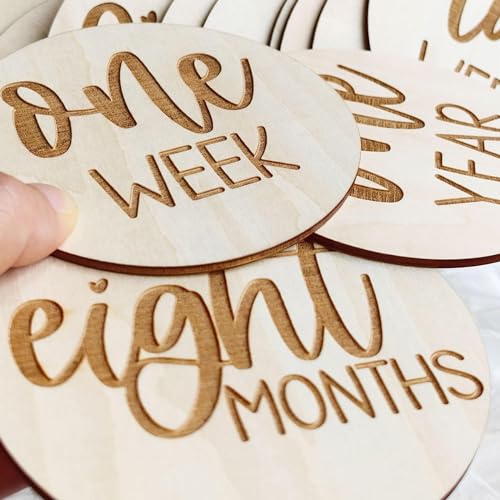
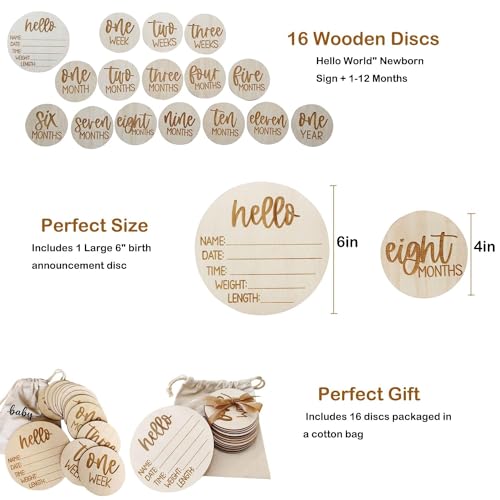
Wooden Milestone Cards and Discs 16pc Set for Baby Photos and First Year Milestones - New Parents and Baby Showers with "Hello World" Sign and Monthly Cards from 1-12 Months
- Durable & Timeless: Our Wooden Baby Monthly Milestone Cards are a favorite among parents for their long-lastin
- The Wooden Baby Monthly Milestone Cards make a perfect gift for baby showers, gender reveal parties, newborn b
- Natural & Eco-Friendly: Our Wooden Monthly Milestone Discs are handcrafted from natural birch wood, free from
For parents who want something with a classic, lasting feel, the wooden milestone discs from ajdvart are a standout choice — they're gender-neutral, made from natural birch wood, and sturdy enough to reuse for future children. If you prefer something with a pop of colour and a more playful aesthetic, the HUHJRUAR Monthly Milestone Cards (Cards-1) or HUHJRUAR Monthly Milestone Cards (Cards-2) are printed on thick 5×7-inch card stock and include holiday milestone cards alongside the monthly set.
For a boy-specific option, the AOQURE Blue Boy Watercolor Milestone Cards feature a beautiful watercolor design and are rated 4.9 stars. The BEADED Baby First Holiday Cards (blue) are a lovely gender-neutral choice that documents both monthly and "first" milestones in one set. And if you're looking for the most budget-friendly entry point, the GIOGUK Watercolor Animals Milestone Cards at under $10 offer 12 beautifully illustrated cards that work equally well as photo props or nursery decor.

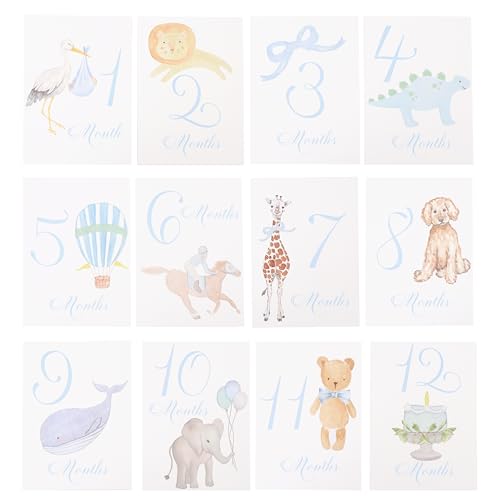
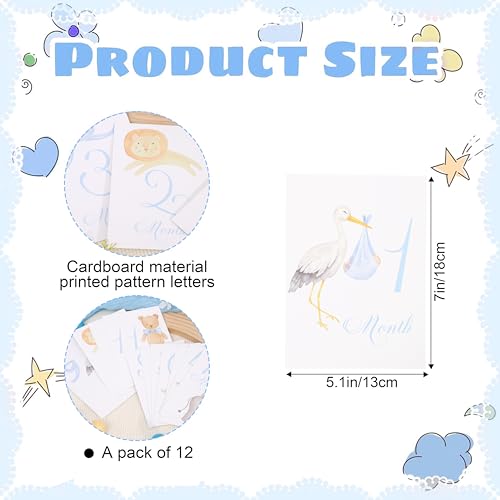
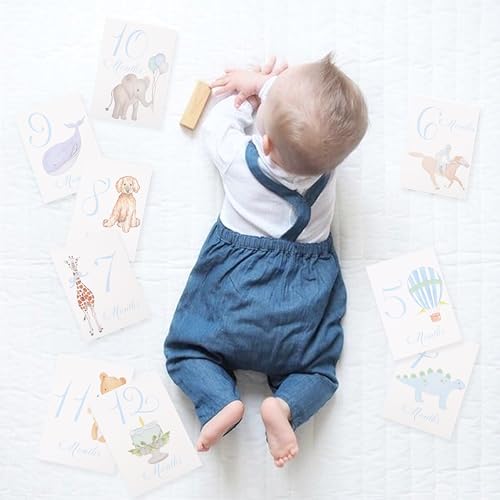
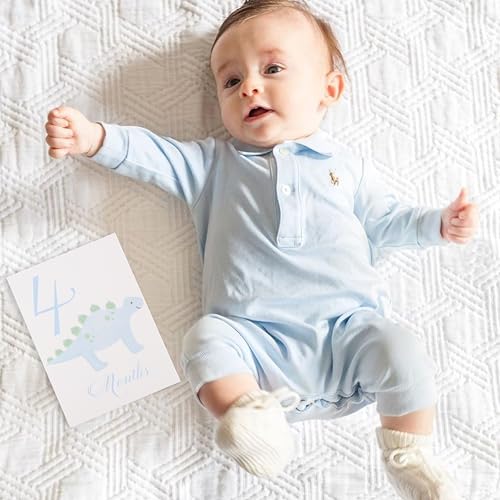
Baby First Holiday Cards - First Year Cards,Monthly Milestone Baby Shower,Milestone Monthly Holiday Photo,Photo Props (blue)
- Baby First Holiday Cards: Record Every Precious Moment Of Your Baby's Journey With Our Beautiful Baby Mileston
- Monthly Milestone Baby Shower: Make Precious Memories With These Adorable Milestone Cards That Chronicle The F
- Milestone Monthly Holiday Photo Cards:Mark Each Special Moment Of Your Baby Boy's First Year Of Life With Our
Milestone Card Comparison: Finding the Right Set for Your Family
| Card Set | Style | Material | Months Covered | Best For | Recommended Product | Price |
|---|---|---|---|---|---|---|
| HUHJRUAR Cards-1 | Colourful, playful | Thick printed card | 12 months + holidays | Parents who want a full first-year set with holiday cards | HUHJRUAR Milestone Cards-1 | $24.99 |
| HUHJRUAR Cards-2 | Colourful, playful | Thick 5×7 card | 12 months + holidays | Those wanting a slightly larger card format | HUHJRUAR Milestone Cards-2 | $24.99 |
| ajdvart Wooden Discs | Classic, gender-neutral | Natural birch wood | 1–12 months | Eco-conscious parents; families planning multiple children | ajdvart Wooden Milestone Cards | $23.99 |
| AOQURE Watercolor Boy | Watercolor, blue-themed | Card | 12 months | Boy-specific nursery aesthetic | AOQURE Blue Boy Milestone Cards | $13.48 |
| BEADED Holiday Cards | Soft, milestone-focused | Card | Monthly + firsts | Parents who want "first smile," "first steps" captured too | BEADED First Holiday Cards | $22.99 |
| GIOGUK Watercolor Animals | Illustrated, whimsical | Card | 1–12 months | Budget-friendly; doubles as nursery decor | GIOGUK Watercolor Animals Cards | $9.99 |
Expert Insights on Newborn Development
The First Month Is Already the Story
Here's what nobody tells you before you have a baby: the first month isn't a waiting room for the "real" milestones. It is the foundation. Every time you hold your baby skin-to-skin, answer their cry, or talk to them during a nappy change, you are doing developmental work that matters more than any toy, app, or programme ever will.
The moments that feel small — the way they grip your finger, the brief flicker of focus when they find your face, the quiet that settles over them when they hear your voice — those are the milestones. They're just written in a language you're still learning to read.
The first month is not the beginning of waiting for something to happen. It is something happening — every single day.
If this guide helped you see your newborn a little more clearly, save it, share it with your partner, or pass it to a friend who's just arrived home from the hospital. And if you're tracking the journey, a milestone card set tucked into the nappy bag is a small investment in a memory you'll be glad you kept.
Sources & References
- American Academy of Pediatrics. "Bright Futures: Guidelines for Health Supervision of Infants, Children, and Adolescents, 4th Edition." 2017 (updated 2023). https://brightfutures.aap.org
- American Academy of Pediatrics. "Safe Sleep and Skin-to-Skin Care in the Neonatal Period for Healthy Term Newborns." Pediatrics, 2016 (reaffirmed 2022). https://publications.aap.org
- World Health Organization. "Recommendations on Newborn Health." 2022. https://www.who.int/publications/i/item/9789240036666
- Center on the Developing Child, Harvard University. "Serve and Return Interaction Shapes Brain Circuitry." 2023. https://developingchild.harvard.edu
- Meltzoff, A.N. & Moore, M.K. "Imitation of Facial and Manual Gestures by Human Neonates." Science, 1977. Updated research: Institute for Learning & Brain Sciences, University of Washington. https://ilabs.uw.edu
- National Sleep Foundation. "How Much Sleep Do Babies Need?" 2023. https://www.sleepfoundation.org/baby-sleep
- Acta Paediatrica. "Newborn recognition of the mother's voice." Various issues. https://onlinelibrary.wiley.com/journal/16512227
- American Academy of Pediatrics. "Caring for Your Baby and Young Child: Birth to Age 5, 7th Edition." Shelov, S. & Altmann, T. (Eds.), 2023.
Frequently Asked Questions
Is it normal for my newborn to lose weight after birth?
When should my baby make eye contact?
How much should a newborn sleep?
When do newborns start smiling?
How do I know if my baby can hear properly?
Is tummy time safe for a newborn?
My baby's head looks misshapen. Is that normal?
Was this helpful?
Thanks — your feedback helps us pick what to write next.