The Wooden Abacus: Your Child's First Maths Brain-Builder
The best educational toys aren't the most expensive — they're the ones that match your child's developmental stage, invite open-ended exploration, and hold attention long enough to build real skills.

In this article
Walk into any toy store — or scroll through Amazon for thirty seconds — and you'll be confronted with a wall of brightly coloured packaging promising to make your child smarter, more creative, or ready for kindergarten. The U.S. toy market was valued at over $40 billion in 2023, according to the Toy Association, yet research from the American Academy of Pediatrics (AAP) consistently shows that the most developmentally powerful play is often the simplest: open-ended, hands-on, and guided by a child's own curiosity.
So how do you cut through the noise and spend your money on something that will actually matter?
In this article you'll understand:
Let's get into it.
1. The Wooden Abacus: Your Child's First Maths Brain-Builder
The abacus is worth buying because it makes abstract number concepts physically tangible — and that concreteness is exactly what young brains need to build lasting maths understanding.
Here's the thing most parents don't realise: children under seven learn mathematics primarily through the body, not through symbols on a page. When your three-year-old slides a bead across a rod, they are not just counting — they are encoding quantity, sequence, and one-to-one correspondence into muscle memory. This is sometimes called the "concrete-pictorial-abstract" (CPA) progression, a framework widely used in evidence-based maths curricula and endorsed by education bodies including the UK's National Centre for Excellence in the Teaching of Mathematics (NCETM).
Children who use manipulatives in mathematics instruction generally outperform those who do not.
— National Council of Teachers of Mathematics (NCTM), Position Statement on Manipulatives (2014)
What Skills Does an Abacus Actually Build?
The Melissa & Doug Classic Wooden Abacus is one of the most reviewed children's toys on the market (over 18,000 ratings at 4.8 stars) and costs just $13.49. Ten rows of ten brightly coloured beads, solid wood construction, no batteries required. It will outlast every plastic toy in your house.

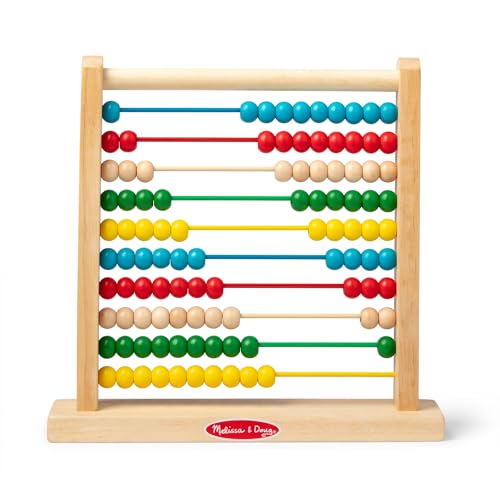


Melissa & Doug Abacus Classic Wooden Toy with 100 Beads - Preschool Learning Activities and Math Games for Kids, Homeschool Essentials for Ages 3+
- Classic Counting Tool This traditional wooden toy abacus features 10 rows of 10 brightly colored wooden beads,
- Math Manipulatives An essential for homeschool essentials and preschool learning activities, this abacus makes
- Sturdy Wooden Construction Made from solid wood with a smooth finish, this durable learning toy is built to wi
2. Self-Correcting Alphabet Puzzles: Reading Readiness Without the Frustration
Self-correcting puzzles are worth every penny because they give children immediate, honest feedback — no adult needed, no shame, just try-again resilience built one piece at a time.
Early literacy research is unambiguous: letter recognition in the preschool years is one of the strongest predictors of reading success in primary school. A landmark longitudinal study published in the journal Child Development found that children who could identify more letters at age four had significantly better reading outcomes at age seven, even after controlling for socioeconomic status. The mechanism matters, though. Rote flashcard drilling produces short-term recall; tactile, multi-sensory engagement produces durable learning.
Why "Self-Correcting" Is a Bigger Deal Than It Sounds
Traditional puzzles let a determined child force a wrong piece into a gap. Self-correcting puzzles physically prevent that — pieces only fit their correct match. This design feature does something quietly powerful: it removes the adult from the error-correction loop. Your child tests a hypothesis, gets clear feedback, adjusts, and tries again. That loop — test, fail, adjust, succeed — is the foundation of a growth mindset.
The Melissa & Doug Self-Correcting Alphabet Puzzle is recommended for ages 4 and up and retails at $15.19 — less than a large pizza, and considerably more nutritious for your child's brain.

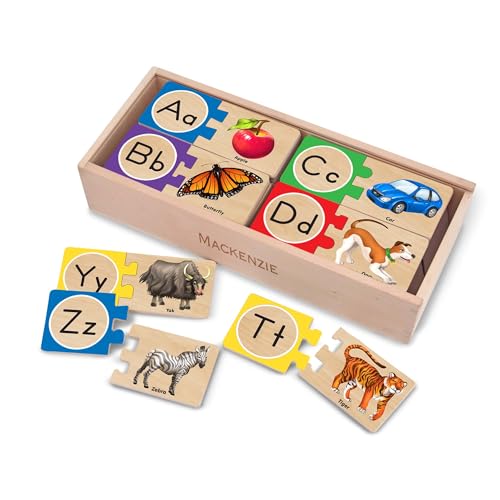
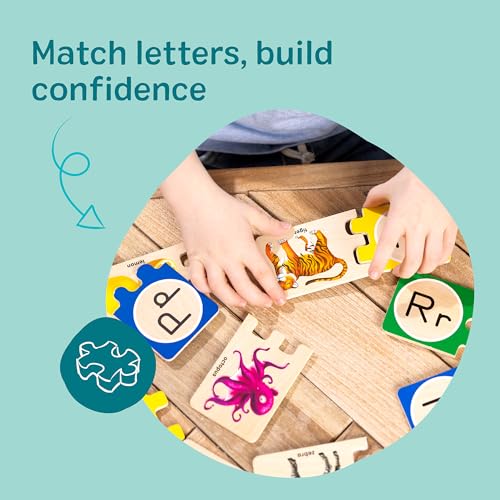
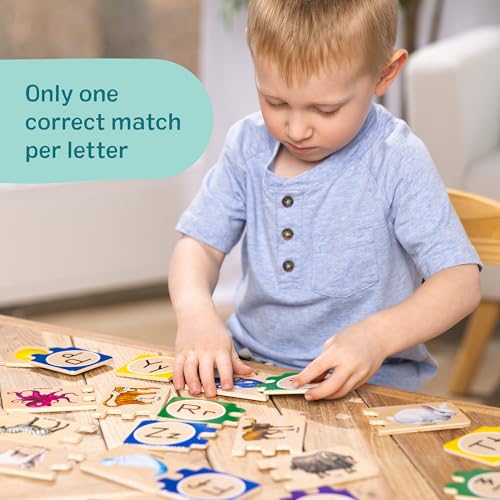
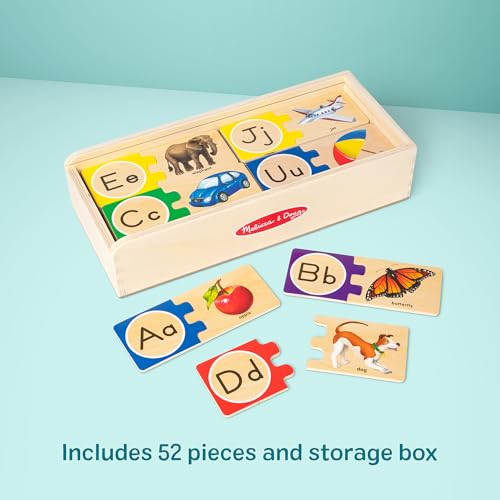
Melissa & Doug Self-Correcting Alphabet Wooden Puzzles with Storage Box (52 pcs) ABC Puzzles, Wooden Alphabet Puzzle for Kids Ages 4+
- Self-Correcting Puzzle: Each puzzle piece shows a capital or lowercase letter, and a labeled image, that only
- Educational Alphabet Letter Puzzle: Includes 52 wooden puzzle pieces with detailed illustrations, and a sturdy
- Open-Ended, Screen-Free Play: Supports letter recognition, vocabulary building, fine motor control, and proble
3. Pattern Blocks and Boards: The Spatial Intelligence Toy Most Parents Overlook
Pattern blocks deserve a place in every home because spatial reasoning — the ability to mentally manipulate shapes and visualise relationships — is a stronger predictor of STEM achievement than early reading scores, yet it receives almost no attention in standard preschool curricula.
A 2020 meta-analysis published in Psychological Bulletin reviewed 70 studies and confirmed that spatial skills are malleable (they genuinely improve with practice) and that early spatial play is one of the most reliable ways to develop them. Tangram-style activities, in which children arrange geometric tiles to fill a pattern, sit at the heart of that evidence base.
What Your Child Is Actually Practising
When your four-year-old arranges hexagons and triangles to fill a flower shape on a puzzle board, they are:
Spatial thinking is a neglected aspect of the curriculum, despite its importance for learning in STEM fields.
— National Research Council, "Learning to Think Spatially," (2006)
The Melissa & Doug Pattern Blocks and Boards set includes 120 wooden tiles and five double-sided puzzle boards at $15.79. The double-sided boards are a clever detail — one side shows the individual tile outlines (easier), the other shows only the completed silhouette (harder), so the same toy stays challenging as your child grows.

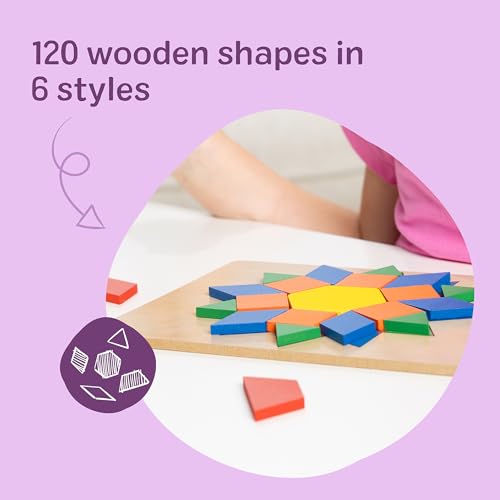
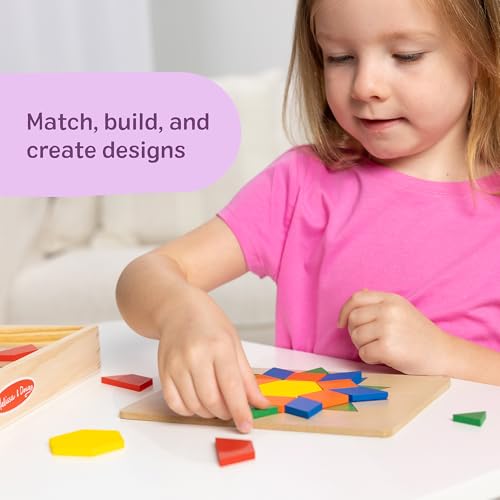
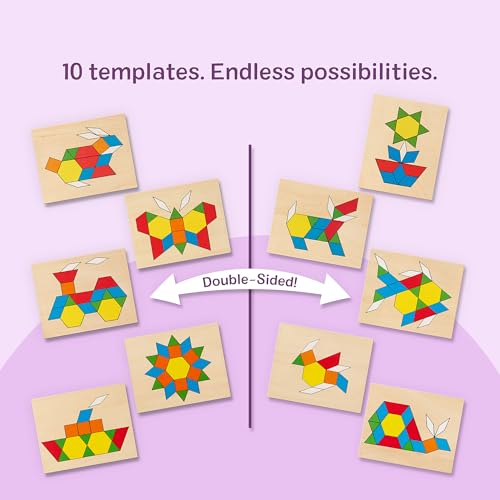
Melissa & Doug Pattern Blocks and Boards with 120 Multi-Colored Wooden Shape Tiles, 5 Double-Sided Puzzle Boards, Tangram Puzzles, Montessori Toys for Girls & Boys
- Skill-Building Pattern Play: Kids sort & stack wooden shaped tiles, to fill 5 unique patterns allowing them to
- Montessori Learning Activity: Includes 120 wooden tiles in various shapes, sizes & colors, 5 double-sided puzz
- Open-Ended, Screen-Free Play: Develop spatial awareness, hand-eye coordination, and early math skills through
4. Mr. Pencil's Scribble, Write and Read: When a Screen Actually Earns Its Place
Not all screen-based toys are equal — and the LeapFrog Mr. Pencil's Scribble Write and Read earns its place because it transforms passive screen watching into active, stylus-guided handwriting practice with immediate animated feedback.
The distinction between active and passive screen use is one the AAP draws explicitly. Passive consumption — watching videos, swiping through apps — produces minimal learning in children under five. Active, contingent interaction — where the screen responds to what the child does — is meaningfully different. Mr. Pencil requires your child to trace letters and numbers with physical strokes, then rewards correct formation with an animated transformation (the letter "B" becomes a buzzing bee, for example). That contingent reward loop reinforces correct pencil grip and stroke direction in a way a worksheet simply cannot.
Who This Is Best For
At $29.97, this sits in the mid-range of the toys reviewed here, but the name-personalisation feature and the step-by-step stroke guidance give it genuine longevity across the preschool years.



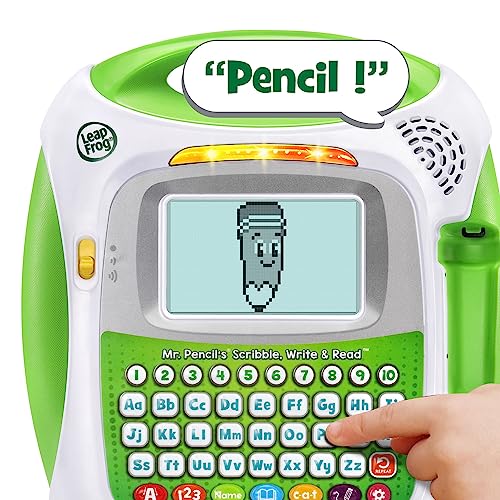

LeapFrog Mr Pencil's Scribble Write and Read, Green
- Your new pal, Mr. Pencil shows kids how to write uppercase and lowercase letters step-by-step, then transforms
- Trace numbers by following the dotted lines, then watch them transform into objects you can count
- Customize by entering a child’s first, middle and last name so they can practice writing it
5. The LeapFrog Magic Adventures Globe: Geography, Curiosity, and the Wide World
The Magic Adventures Globe is worth the investment for school-age children because it converts geography from a subject children memorise into a world they feel curious about — and curiosity is the engine of all self-directed learning.
Geography is chronically under-resourced in primary education. A 2022 survey by the Royal Geographical Society found that many primary school children in the UK could not locate their own continent on a blank map. The picture in the US is similar: a 2016 National Geographic survey found that only 37% of young Americans aged 18–26 could find Iraq on a map. The habit of geographic curiosity needs to be planted early, and a globe — physical, three-dimensional, always present on a shelf — is one of the most effective ways to do it.
What Sets This Globe Apart From a Poster or App
Active retrieval practice — recalling information from memory — dramatically improves long-term retention compared to re-reading or passive review.
— Roediger & Karpicke, "The Power of Testing Memory," Perspectives on Psychological Science (2006)
The LeapFrog Magic Adventures Globe retails at $74.99 — the most expensive item on this list, and the one best suited to children aged 5–12. If your child is in that window and has started asking "where is that?" when they hear a place name on the news, this globe will feed that instinct for years.


LeapFrog Magic Adventures Globe (Frustration Free Packaging)
- Go beyond countries and their capitals using this enhanced globe with a 2.8” video screen that explores cultur
- Educational: This world globe with stand and stylus lets you hear thousands of facts, interact with unique gam
- The 2.8" screen displays video and animations with playful characters that guide children through games and ac
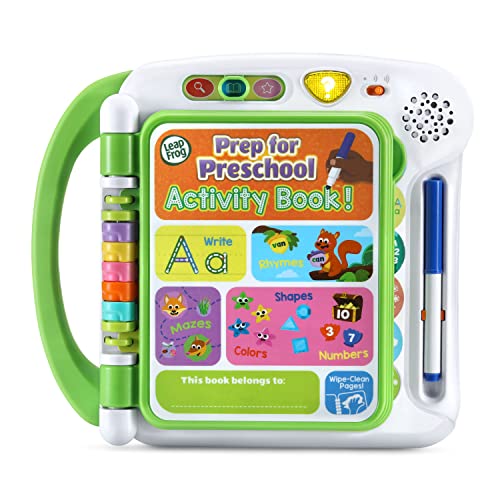
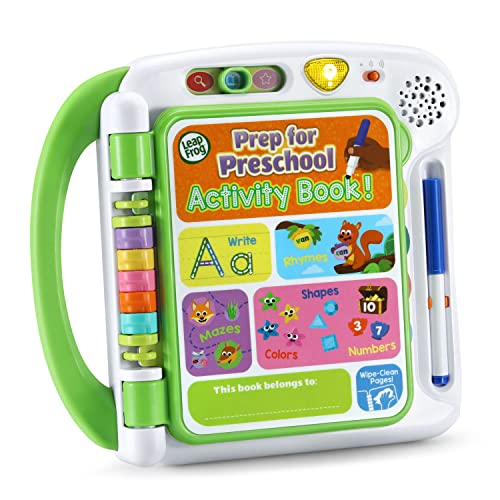
6. LeapFrog Prep for Preschool Activity Book: The Confidence-Builder Before the Big Day
The Prep for Preschool Activity Book earns its spot because school readiness is not just about academic skills — it is about a child walking through the classroom door feeling capable — and this book is specifically designed to build that confidence.
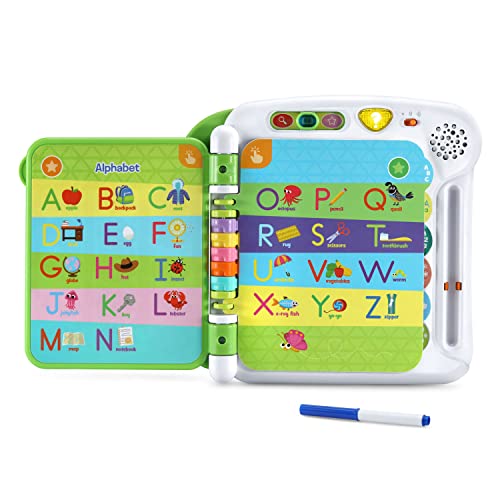
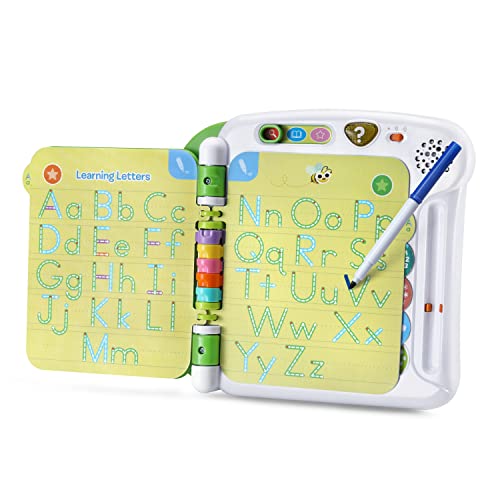
Research on school readiness consistently identifies two clusters of skills that predict successful transitions to formal schooling: academic readiness (letters, numbers, shapes) and self-regulatory readiness (the ability to focus, follow instructions, and manage frustration). The best preschool prep tools address both. This activity book does, by combining structured practice pages (letter tracing, number matching, shape recognition) with an erasable pen that lets children correct their own mistakes without the anxiety of permanent marks.
Six Touch-Sensitive Pages, One Very Ready Child
The LeapFrog Prep for Preschool Activity Book costs $22.39 and has 4.7 stars across over 2,500 reviews. Pair it with the LeapFrog Mr. Pencil's Scribble Write and Read for a complementary writing-and-readiness duo that covers nearly every preschool readiness benchmark.
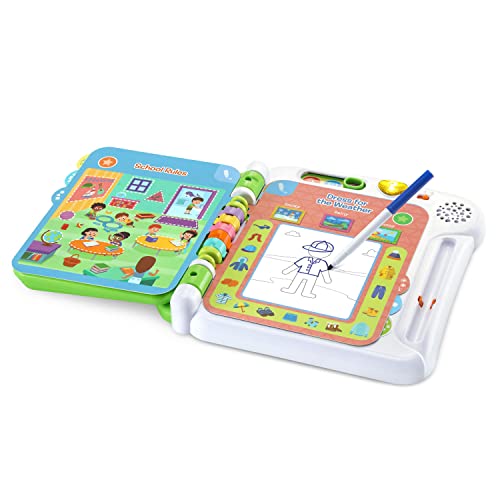
LeapFrog Prep for Preschool Activity Book
- Interactive book helps preschoolers prepare for school and build confidence with replayable learning activitie
- Explore counting, colors, shapes, the alphabet and words with six touch-sensitive pages
- Practice letter writing, number matching, shape tracing and line drawing with six marker pages and an erasable
How These Toys Compare at a Glance
| Toy Type | Best Age Range | Primary Skills Developed | Screen Involved? | Recommended Product | Price |
|---|---|---|---|---|---|
| Wooden abacus | 3–7 years | Counting, addition/subtraction, fine motor | No | Melissa & Doug Wooden Abacus | $13.49 |
| Self-correcting alphabet puzzle | 4–6 years | Letter recognition, vocabulary, problem-solving | No | Melissa & Doug Alphabet Puzzle | $15.19 |
| Pattern blocks and boards | 3–8 years | Spatial reasoning, geometry, hand-eye coordination | No | Melissa & Doug Pattern Blocks | $15.79 |
| Interactive writing toy | 3–5 years | Handwriting, letter formation, phonics | Yes (active) | LeapFrog Mr. Pencil | $29.97 |
| Preschool activity book | 3–5 years | School readiness, numeracy, tracing, confidence | Yes (active) | LeapFrog Prep for Preschool Book | $22.39 |
| Interactive globe | 5–12 years | Geography, world cultures, trivia, retrieval practice | Yes (active) | LeapFrog Magic Adventures Globe | $74.99 |
Expert Insights on Educational Toy Selection
Frequently Asked Questions
The Bottom Line
Here's the truth that toy marketing doesn't want you to hear: your child doesn't need more toys. They need the right toys, offered at the right time, with a caregiver willing to sit beside them for even ten minutes and play along.
The six options in this article were chosen because they each do something specific, do it well, and keep doing it as your child grows. None of them require batteries to make noise at you. Most of them cost less than a family trip to the cinema. And all of them are built around the same principle that decades of developmental research keeps returning to: children learn best when they are the ones doing the work.
The most educational toy in the world is a curious child and a present adult. Everything else is just a very good excuse to sit on the floor together.
If this helped you cut through the noise, save it for the next time you're staring at a toy aisle wondering what's actually worth it — and share it with a parent who needs to hear it.
Sources & References
- American Academy of Pediatrics. "The Power of Play: A Pediatric Role in Enhancing Development in Young Children." Pediatrics, 2018. https://publications.aap.org/pediatrics/article/142/3/e20182058/38649
- American Academy of Pediatrics. "Literacy Promotion: An Essential Component of Primary Care Pediatric Practice." Pediatrics, 2014. https://publications.aap.org/pediatrics/article/134/2/404/32563
- National Council of Teachers of Mathematics (NCTM). "Manipulatives." Position Statement, 2014. https://www.nctm.org
- National Research Council. "Learning to Think Spatially: GIS as a Support for the Curriculum." National Academies Press, 2006. https://nap.nationalacademies.org/catalog/11019
- Uttal, D.H., et al. "The Malleability of Spatial Skills: A Meta-Analysis of Training Studies." Psychological Bulletin, 138(2), 352–402, 2012. https://doi.org/10.1037/a0028446
- Roediger, H.L., & Karpicke, J.D. "The Power of Testing Memory." Perspectives on Psychological Science, 1(3), 181–210, 2006. https://doi.org/10.1111/j.1745-6924.2006.00012.x
- James, K.H., & Engelhardt, L. "The Effects of Handwriting Experience on Functional Brain Development in Pre-Literate Children." Trends in Neuroscience and Education, 1(1), 32–42, 2012. https://doi.org/10.1016/j.tine.2012.08.001
- Lonigan, C.J., et al. "Development of Emergent Literacy and Early Reading Skills in Preschool Children." Developmental Psychology, 36(5), 596–613, 2000.
- Royal Geographical Society. "Geography in Primary Schools Survey." 2022. https://www.rgs.org
- The Toy Association. "U.S. Toy Industry Annual Report." 2023. https://www.toyassociation.org
- Golinkoff, R.M., & Hirsh-Pasek, K. "Becoming Brilliant: What Science Tells Us About Raising Successful Children." American Psychological Association, 2016.
Frequently Asked Questions
At what age should I start buying educational toys?
Are electronic learning toys actually educational?
How do I know if a toy labelled "educational" is actually worth buying?
How much should I spend on educational toys?
Can educational toys replace reading aloud with my child?
My child ignores the "educational" toys I buy and goes back to their favourites. Is that normal?
Are wooden toys better than plastic ones for learning?
Was this helpful?
Thanks — your feedback helps us pick what to write next.